
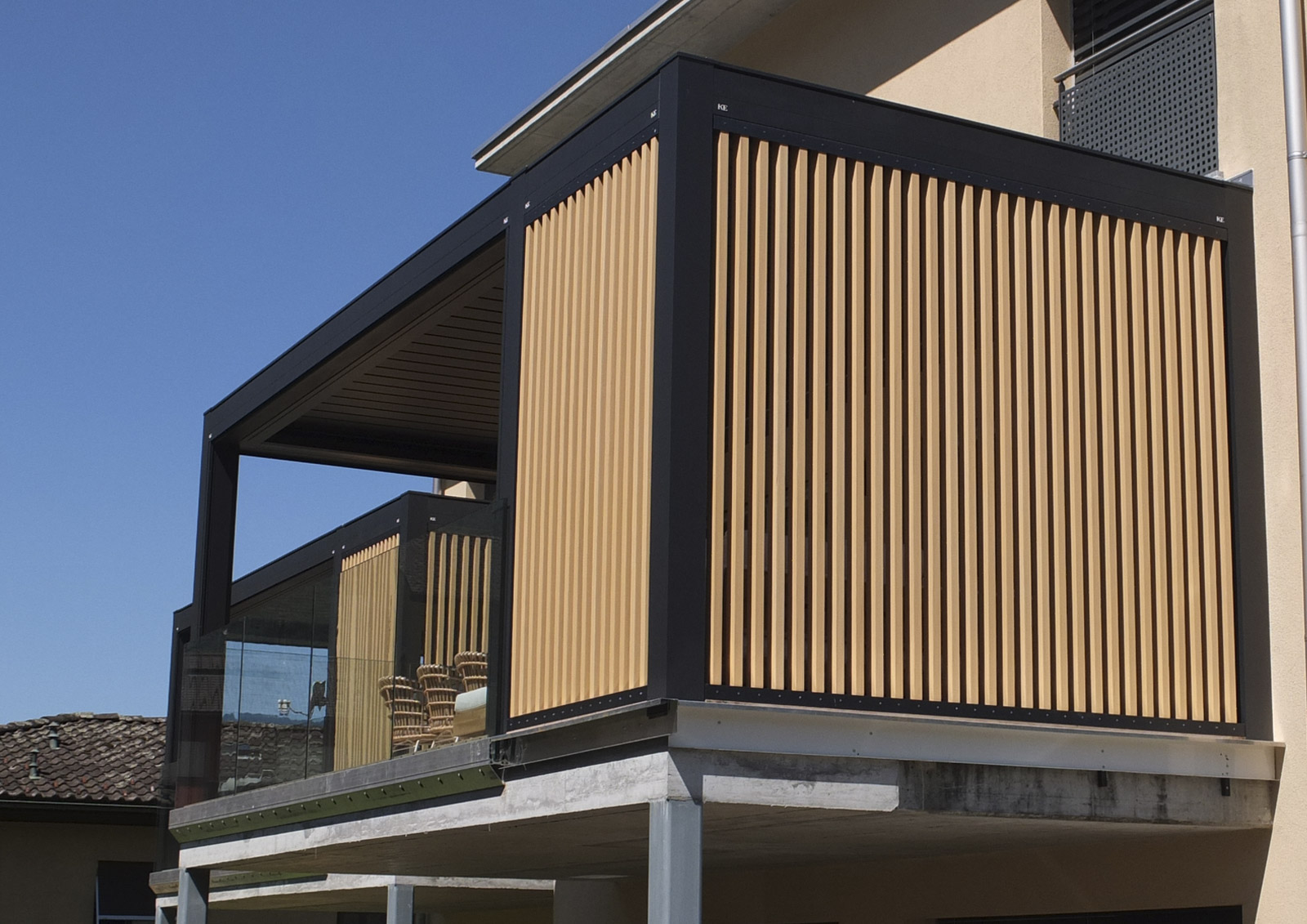
Choose the right one Sun breaker means to intervene concretely on the comfort, aesthetics, and energy performance of the home. It is an architectural element – not a decorative one – that regulates light, temperature, and privacy. A well-designed system improves the livability of spaces and reduces energy consumption, especially during the warmer months.
In this article, we delve into the choices: materials, orientation, shapes, and custom WPC wood solutions.
What is a sunshade and why is it essential
The sunshade is a screening system designed to filter direct sunlight. Unlike curtains or blinds, it works by modulating light and dynamically shading spaces.
Install a External sunshade allows
- Reduce indoor overheating
- Improve the energy efficiency of the building
- Increase visual comfort
- Protect surfaces and furniture from UV rays
The Exterior sunshadeNo it is a key element in contemporary architectural language also for defining a facade's character.
Exterior or interior sunshade: which to choose
The choice between indoors e Outdoor entirely changes the impact of the system.
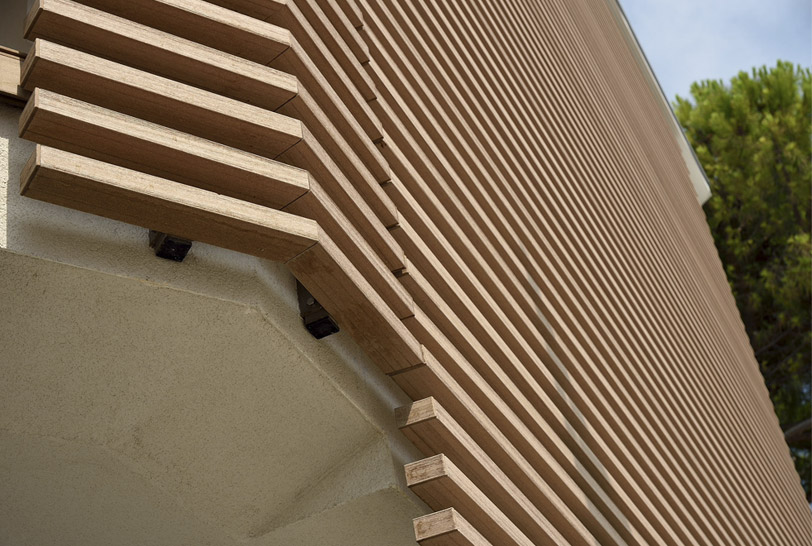
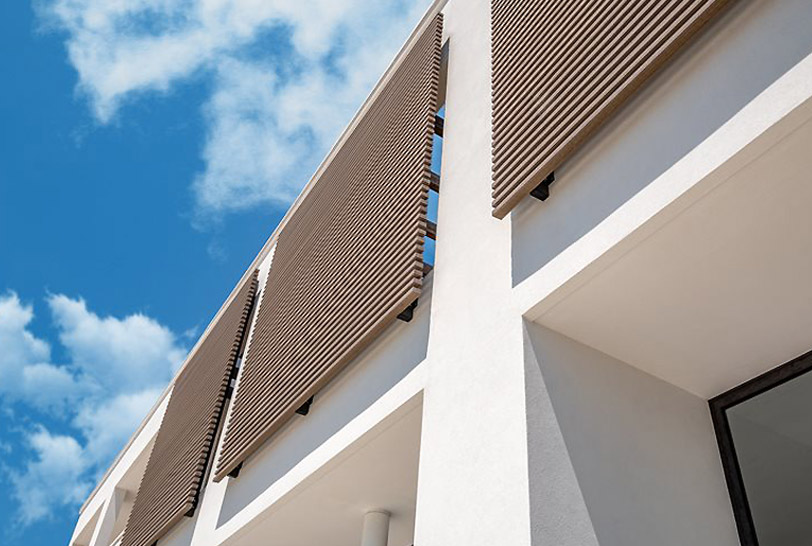
- The Sun breaker Exterior It is the most thermally effective solution. It blocks solar rays before they hit glass surfaces, drastically reducing the greenhouse effect.
- The internal sunshade focus more on visual comfort and light management. It has significant aesthetic value, but lower efficacy in temperature control.
If the goal is to truly improve the building's performance, the outdoor louvers represents the ideal solution.
Materials: Why Choose WPC
One of the deciding factors concerns the material. aluminum sunshades They are very popular for their lightness and resistance, but in recent years a more advanced solution has been emerging: WPC wood.
The Wood Plastic Composite It combines the aesthetic of wood with the resistance of technical materials. This means:
- longer duration over time
- weather resistance
- minimal maintenance
- dimensional stability
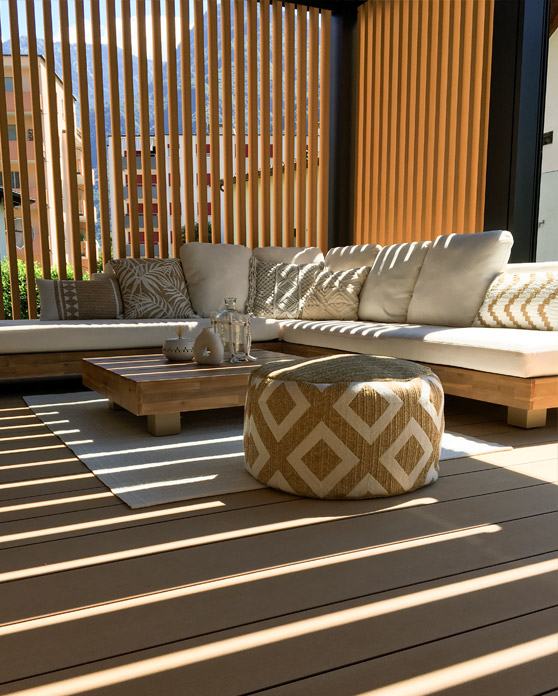
Orientation: horizontal or vertical
The arrangement of the slats radically changes the behavior of the Sun breaker.
- Horizontal positionIdeal for shielding from the high sun, typical of the central hours of the day. It's the most common choice for south-facing facades.
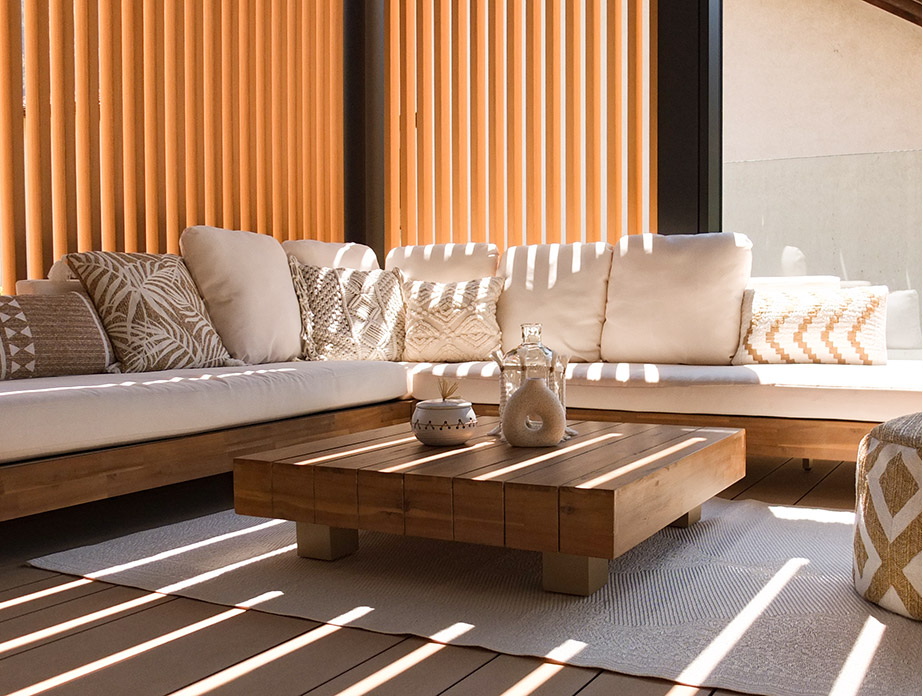
- Standing pose: more effective against low sun, like that of the morning or late afternoon. Works well on east and west exposures.
This is not an aesthetic choice: it's entirely functional. It must be done based on the building's orientation and actual solar radiation.
Shape and Design: The Role of Slats
Here plays an important part in the project. The slats build rhythm, depth, and visual identity. The sunscreens Versatile At Woodn Greenwood, they offer around 30 different profiles, all customizable.. I'm waiting for it to open up to real design freedom.
The main variants include:
- Square and rectangular sectionsFormal cleanliness, perfect for modern architecture
- ProfessorIf and whensofter lines, greater visual dynamism
- Special shapesCustomized solutions for complex projects
Finishes and customization
Another often underestimated aspect concerns the finish.
I Sun breaker Versatile available in:
- Smooth finishmore minimal, contemporary
- Brushed finishTextured effect, warmer and more natural
This is enhanced by a customization level that allows the system to be adapted to residential, commercial, or contract settings.
- Fully custom lengths
- Integrated fastening systems
- Indoor and outdoor installation possibility
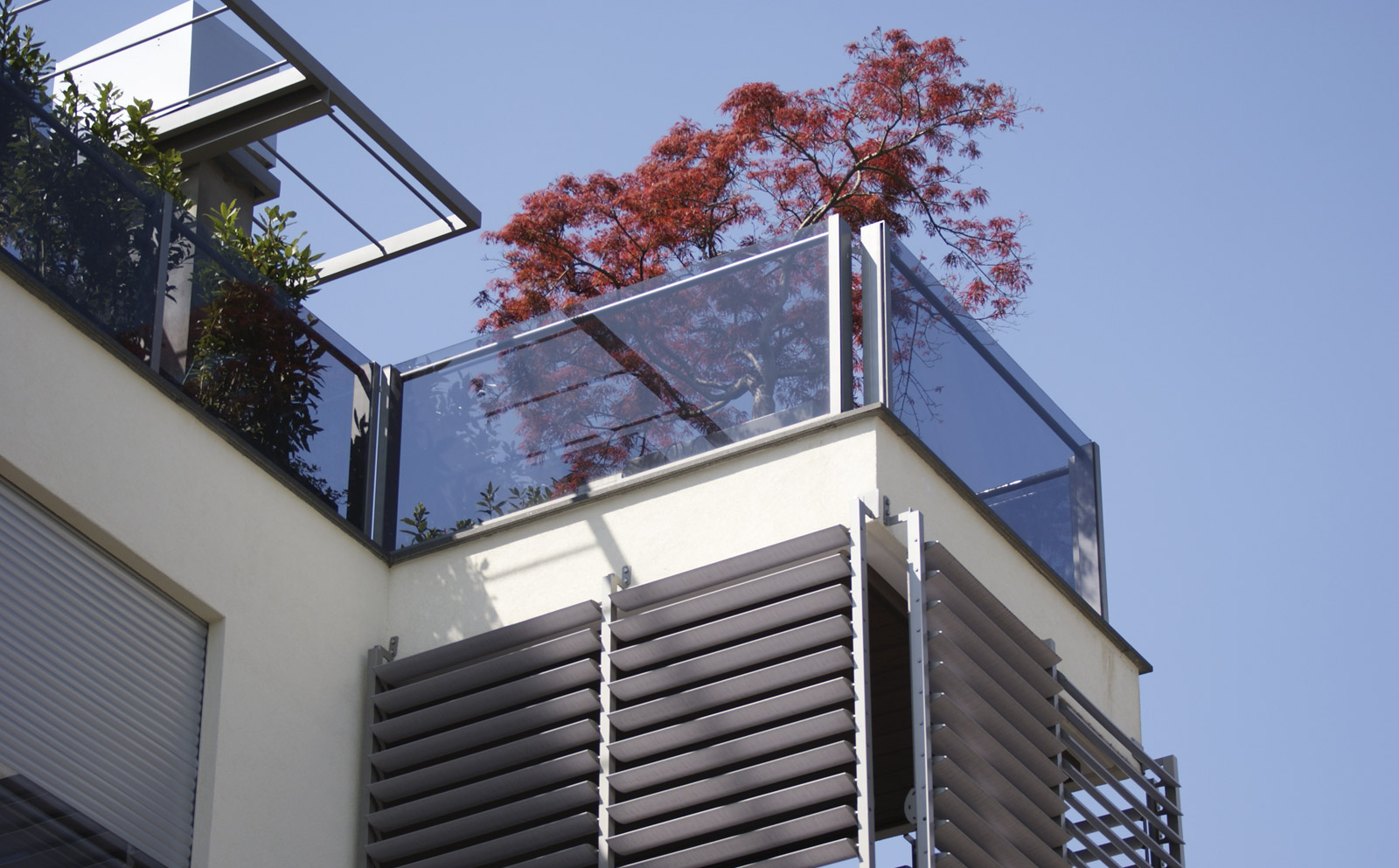
Energy performance and comfort: when to choose a custom system
A properly designed sunshade significantly impacts the building's energy performance.. By intercepting solar radiation before it reaches glazed surfaces, it helps to limit the overheating of indoor environments and reduce the reliance on air conditioning.
At the same time, Improve visual comfort and protects spaces from the’direct UV exposure, promoting more stable and controlled conditions throughout the day.
The sunscreens Versatile they offer a wide range of configuration options, thanks to customizable profiles, different sections, and adaptable solutions for facades and screens. The result is a system where technical performance and aesthetic outcome are developed in a coordinated manner.